Looking to house hack or make your first small investment in Rutherford? You are not alone. With strong commuter demand and solid rental fundamentals, a well-bought duplex or triplex can help offset your mortgage and build equity over time. In this guide, you will learn what 2 to 4 unit properties look like here, how to run the numbers, common financing paths, and a practical due diligence checklist. Let’s dive in.
Rutherford small multi-family at a glance
Rutherford is a Bergen County borough with about 19,200 residents and a relatively high median household income. Recent estimates show a median gross rent near $1,966 and a median value of owner-occupied homes around $603,600, according to Census QuickFacts for Rutherford.
On pricing, two-family homes and small multi-unit offerings often sit in the mid six figures to low seven figures. It is common to see two-family assets priced near the higher end of local single-family ranges because of commuter demand. One-bedroom rents often land around 2,000 to 2,200 dollars, and many two-bedrooms rent in the 2,500 to 2,900 dollar range, depending on condition and location. Always confirm with the current rent roll and a local rent survey before you underwrite a deal.
Property taxes are a major line item in New Jersey. Rutherford’s average residential property tax bill in 2023 was about $13,260, according to the state’s municipal averages report from the NJ Division of Taxation. Build that into your budget early.
Who this strategy fits
- House hackers who plan to live in one unit and rent out the others.
- First-time investors who want residential financing on a 2 to 4 unit instead of commercial terms.
- Move-up buyers who like the idea of rental income helping with expenses in a high-cost market.
What you will find in Rutherford
You will mainly see:
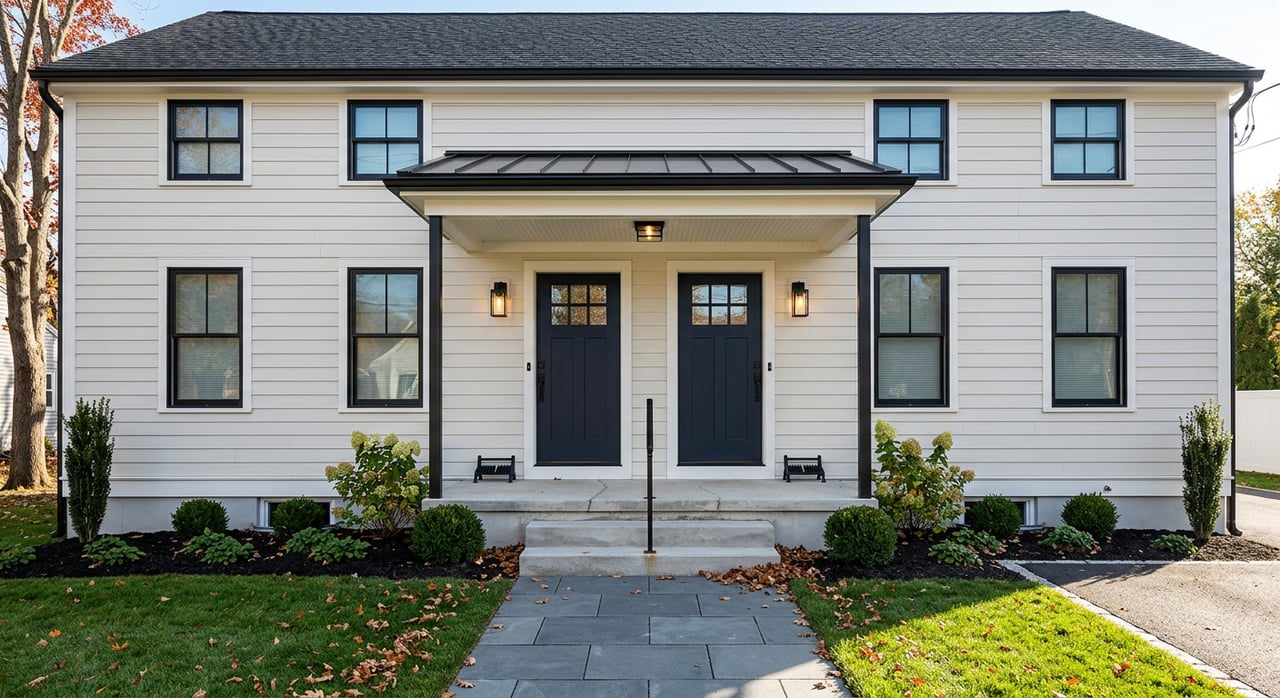
- Legal two-family homes, often converted from older single-family houses, either stacked or side-by-side.
- Classic small brick or wood-frame duplexes and triplexes with varied layouts.
- Occasional small new-construction multi-unit projects.
Features that affect underwriting and due diligence:
- Separate utility metering versus common utilities. Separate meters simplify expense allocation and reduce owner-paid costs.
- Separate entrances and egress, multiple kitchens, and fire separation. These are important for safety codes and insurance.
- Roof age, electrical capacity, plumbing and hot-water systems. Older homes may need near-term capital work.
- Off-street parking, which is valuable near commuter corridors. Check permitted street parking rules too.
Run the numbers with a simple framework
Before you fall in love with a property, map out the income, expenses, and debt service. Here are the key metrics:
- Gross Scheduled Income (GSI) = total annual rents at full occupancy.
- Effective Gross Income (EGI) = GSI minus vacancy and credit loss.
- Operating Expenses = property taxes + insurance + owner-paid utilities + maintenance and repairs + property management + reserves.
- Net Operating Income (NOI) = EGI minus Operating Expenses.
- Cap Rate = NOI divided by Purchase Price.
- Gross Rent Multiplier (GRM) = Purchase Price divided by GSI.
Suggested starting assumptions for Rutherford:
- Vacancy and credit loss: 5 to 7 percent, depending on your view of demand and lease history.
- Property management: 8 to 10 percent of collected rent, lower if you self-manage.
- Maintenance and repairs: 5 to 10 percent of EGI, or budget a per-unit reserve.
- Capital reserves: 250 to 500 dollars per unit, per year. Older buildings often need more.
- Insurance: get quotes early. Premiums vary by age and size.
- Property taxes: use the actual parcel tax bill once available. The borough average of about $13,260 is a helpful placeholder from the NJ Division of Taxation.
A conservative back-of-envelope example
- Purchase price: 1,275,000 dollars for a two-family.
- Rents: Unit A 2,100 dollars per month, Unit B 2,600 dollars per month.
- GSI: 4,700 dollars per month, or 56,400 dollars per year.
- Vacancy at 5 percent: EGI ≈ 56,400 × 0.95 = 53,580 dollars.
- Expenses (illustrative):
- Property tax: about 13,260 dollars per year.
- Insurance + management at 8 percent + maintenance at 8 percent: about 15,074 dollars.
- NOI: 53,580 − (13,260 + 15,074) ≈ 25,246 dollars.
- Cap rate: 25,246 divided by 1,275,000 ≈ 1.98 percent.
This example is intentionally conservative. It shows how high taxes and modest in-place rents can compress cash flow in high-cost commuter towns. Swap in the seller’s rent roll, the actual tax bill, and local insurance quotes to see your true outcome.
Financing paths for 2 to 4 units
Owner-occupied small multi-family can qualify for residential financing, which often means lower down payments than commercial loans. Program rules change, so confirm the latest details with your lender.
FHA for owner-occupants
- FHA insures mortgages on one to four unit homes if you occupy one unit as your primary residence and intend to live there for at least a year. See FHA’s policy overview in the Single Family Housing Policy Handbook.
- Down payments can be as low as 3.5 percent for qualifying borrowers. For three and four unit properties, FHA adds extra tests like self-sufficiency and reserves. Your lender will explain how projected rental income is documented and counted for qualification.
Conventional (Fannie Mae and Freddie Mac)
- Two to four unit properties are eligible for owner-occupied conventional financing within loan limits. Lenders often allow a portion of rental income to help you qualify, using specific documentation.
- Fannie Mae requires a small residential income appraisal for two to four unit homes when rental income is used and has rules for calculating that income. Review the rental income guidance in the Fannie Mae Selling Guide.
Conforming loan limits
- Conforming limits rose for 2026. Bergen County is in a high-cost area, and limits for two, three, and four unit homes are higher than the national baseline. Confirm the current county-specific limits using the FHFA announcement.
Other options
- Portfolio or local bank loans can be helpful if you need more flexible income treatment.
- Short-term bridge or hard-money loans can fund renovations, though they are usually more expensive.
Due diligence in Rutherford
Line up your documents and inspections early so you can move with confidence once you are under contract.
Documents to request from the seller:
- Current rent roll, signed leases, and a security-deposit ledger.
- Twelve to twenty-four months of operating statements and, if available, Schedule E tax returns.
- Utility bills, the certificate of occupancy, and proof of major upgrades like roof, boiler, or electrical work.
Physical inspection priorities:
- Separate meters for gas, electric, and heat. Confirm who pays what in each lease.
- Plumbing and electrical capacity, roof and flashing, structure, and signs of water intrusion.
- Fire separation and egress for each unit, plus any lead-paint risks in pre-1978 buildings.
- HVAC or boiler age and condition. Budget for near-term replacements if systems are at end of life.
Valuation and appraisal:
- Expect a small residential income appraisal for two to four unit homes and a comparable rent schedule when rent helps qualify. See Fannie Mae’s appraisal report forms overview for context.
Local rules and registration:
- Verify the property’s legal multi-family status and any rental registration or licensing requirements with Borough Hall. Review borough resources and connect with the code office early. A starting point is the borough’s planning materials linked on the Rutherford Borough site.
Insurance and legal:
- Get a multi-unit insurance quote during attorney review since premiums can shift your numbers.
- Confirm New Jersey landlord-tenant rules, notice periods, and any local rent regulations with a local attorney.
7 smart next steps
- Speak with two or three lenders, including FHA and conventional, to compare how each treats rental income and what reserves or down payment they require.
- Ask for the rent roll, signed leases, and at least 12 to 24 months of expenses. If units are vacant, plan for an appraiser’s rent opinion during underwriting.
- Hire an inspector who regularly evaluates multi-unit buildings. Get contractor estimates for roof, boiler, electrical, plumbing, and any life-safety items.
- Build a conservative pro forma using the formulas above and confirm all assumptions with actual bills and quotes.
- Consult a CPA about depreciation, passive activity rules, and the tax impact of living in one unit versus renting all units.
- Confirm zoning, the property’s legal unit count, and any landlord registration requirements with Rutherford Borough Hall. Use borough resources as a starting point like the Rutherford Borough site.
- Monitor inventory weekly. In a tight market, being preapproved and offer-ready gives you an edge.
If you want a clear read on today’s inventory, a second set of eyes on your underwriting, or a plan to move fast when the right duplex hits, reach out. We combine neighborhood expertise with a calm, data-first approach so you can buy with confidence. Connect with The Meena Patel Group to start your personalized market plan.
FAQs
Can I buy a duplex in Rutherford with a low down payment?
- Many owner-occupants use FHA or certain conventional programs for two-unit purchases with low down payments, subject to occupancy and underwriting rules. Review FHA policy in the FHA Single Family Handbook and confirm details with your lender.
Will rental income fully cover my mortgage on a 2 to 4 unit?
- Lenders often discount prospective rent and apply documentation rules. Fannie Mae’s guidance outlines how rental income is calculated for qualification. See the Fannie Mae rental income guide for specifics.
Are 2 to 4 unit properties taxed differently in Rutherford?
- They are billed like other taxable properties. Because values are high in Bergen County, property taxes are a key expense. Start with the borough average from the NJ Division of Taxation and confirm the actual parcel bill.
What cap rate should I expect in this area?
- Cap rates vary widely by condition and buyer demand. Institutional surveys for the NY-metro region have shown many multifamily cap rates in the mid 4 to mid 6 percent range recently. Use this as directional context and verify with local comps. For a national view, review the CBRE cap rate survey.
How do conforming loan limits affect me on a duplex or triplex?
- Higher limits apply to two, three, and four unit homes, and high-cost counties like Bergen have larger caps. Check the latest figures in the FHFA loan limits announcement and confirm the county-specific number with your lender.
Ready to buy or sell in Bergen County NJ?
Meena Patel is a Bergen County NJ real estate agent and founder of The Meena Patel Group, a boutique real estate team serving Bergen and Essex County. The Meena Patel Group ranks in the Top 1% of agents nationwide and holds the Circle of Excellence Platinum Award every year. We serve clients in English, Hindi, Gujarati, Punjabi, Portuguese, and Spanish.
Your next move starts with a conversation. We're here when you're ready.The Meena Patel Group
(201) 677-8843 | [email protected]